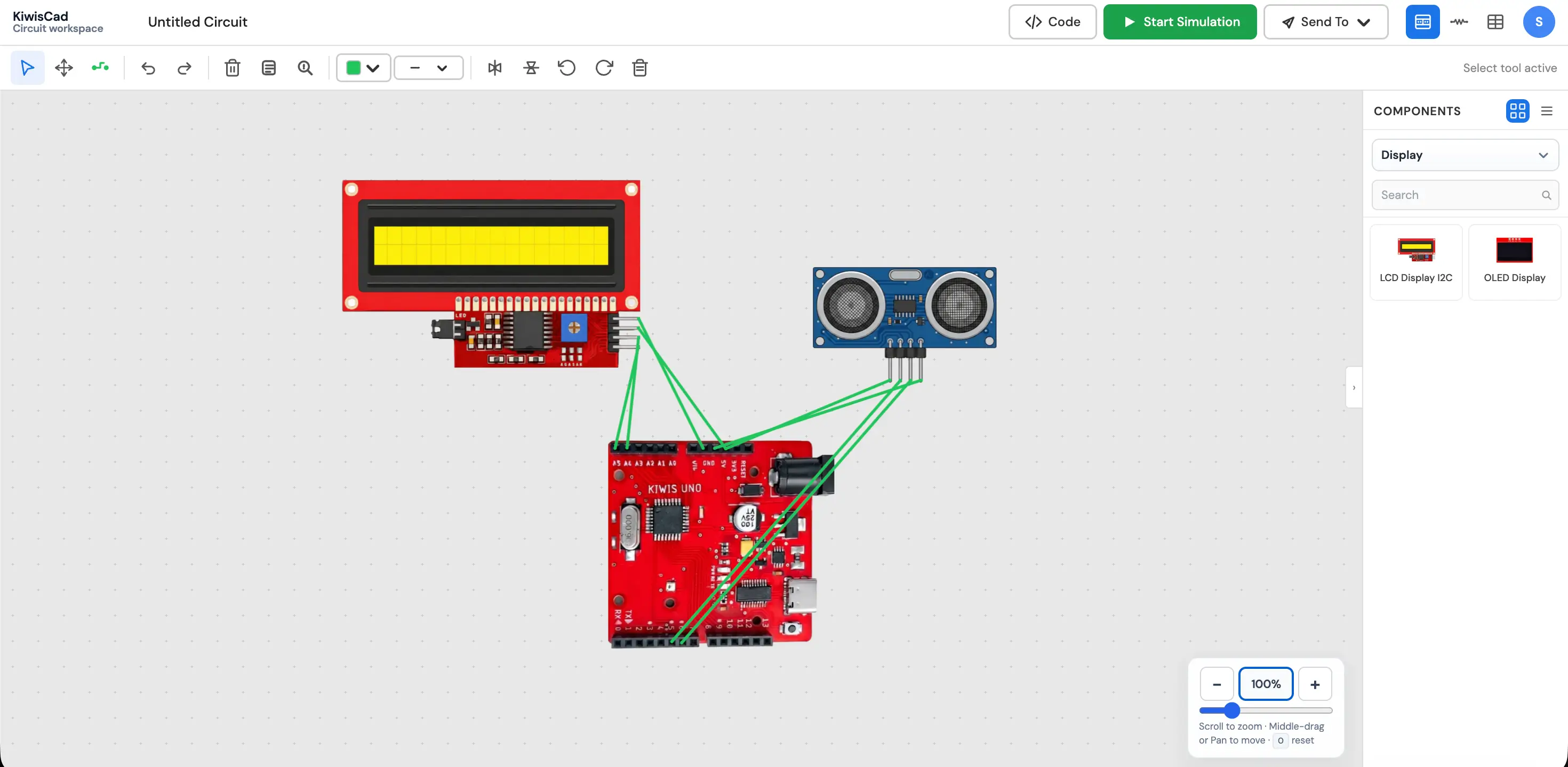
Visual Circuit Editor
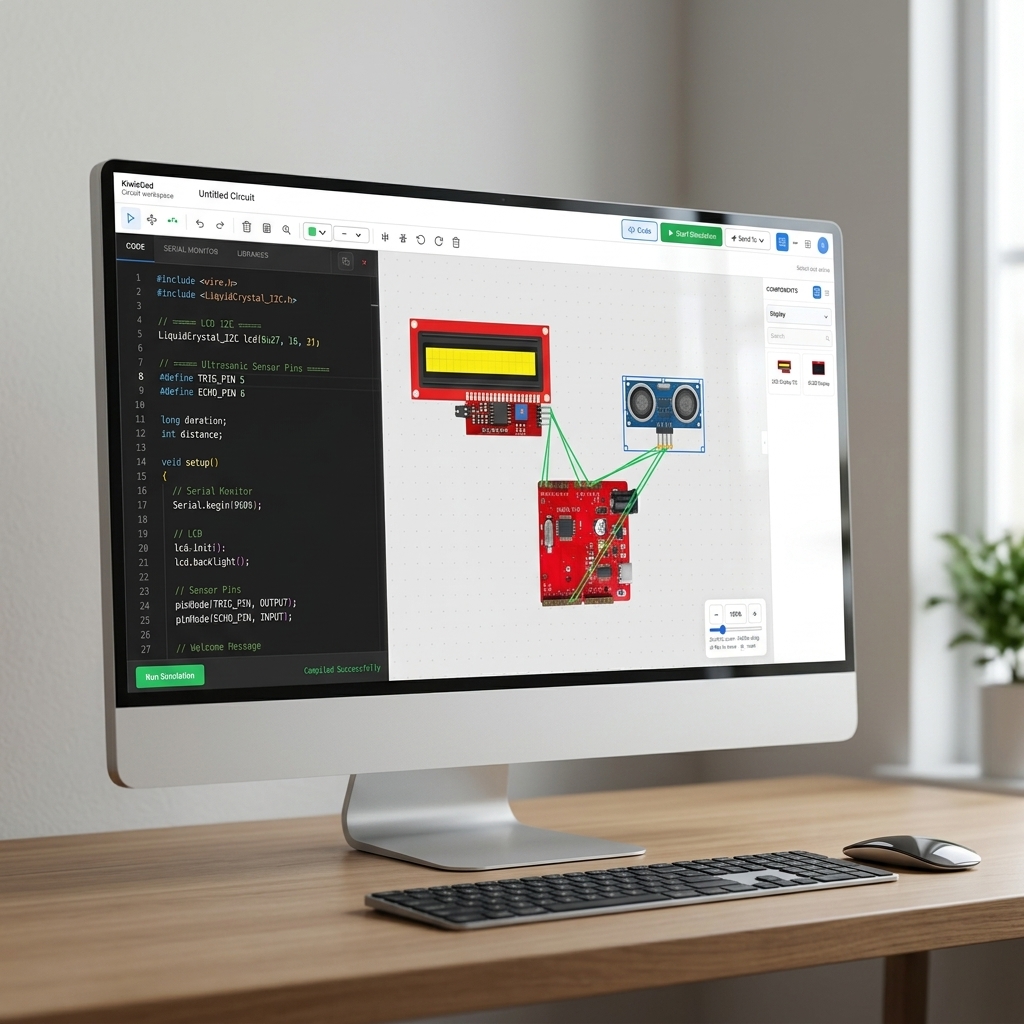
Build your circuits on a beautiful virtual canvas. Drag and drop your Arduino and components, and connect their wires easily before writing any code.
- Drag & drop components
- Clean virtual workspace
- Easy flexible wiring
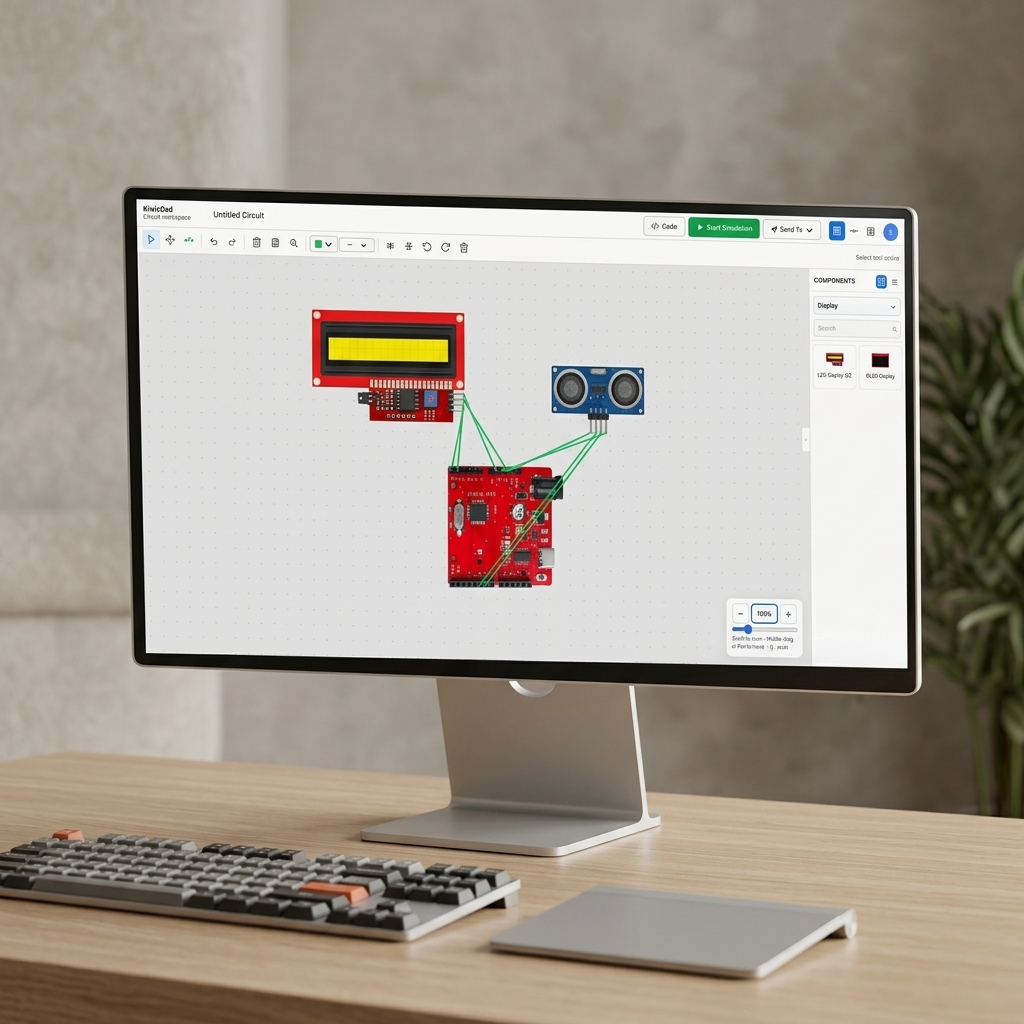
Wire parts, write your sketch, and watch pins respond live — no install and no board required.
Explore how KiwisCAD helps you move from circuit design to running firmware — step by step, without desktop tools.
Build your circuits on a beautiful virtual canvas. Drag and drop your Arduino and components, and connect their wires easily before writing any code.
Your code runs on a built-in simulator that mimics a real microcontroller. It handles all the pins, signals, and math just like the physical board.
Write your Arduino code directly in the browser using our powerful editor. Hit compile, and your code is instantly ready to run and test.
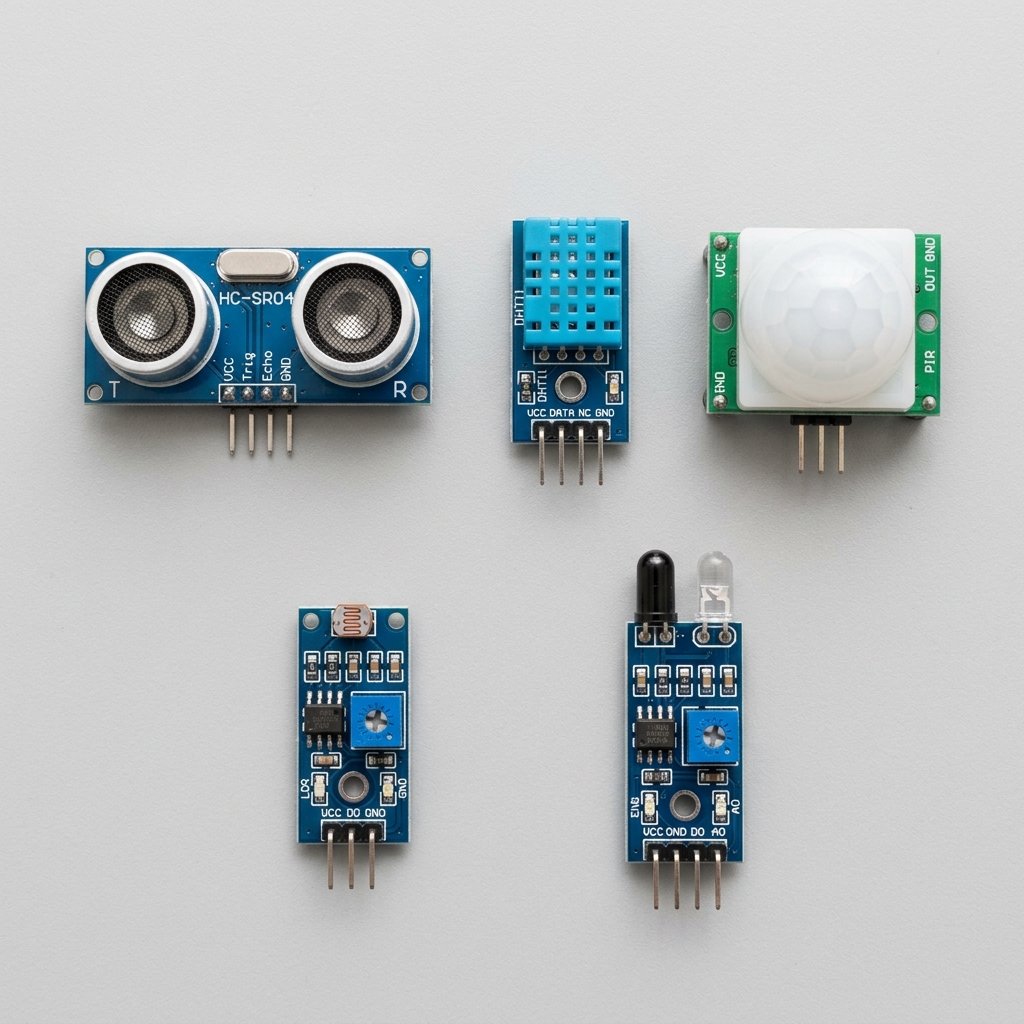
Experiment with a variety of virtual sensors including Ultrasonic distance, DHT temperature, PIR motion, light sensors, and IR obstacle detectors.
Watch your Serial output live while your simulation runs. Print sensor values and catch issues early without needing a USB cable.
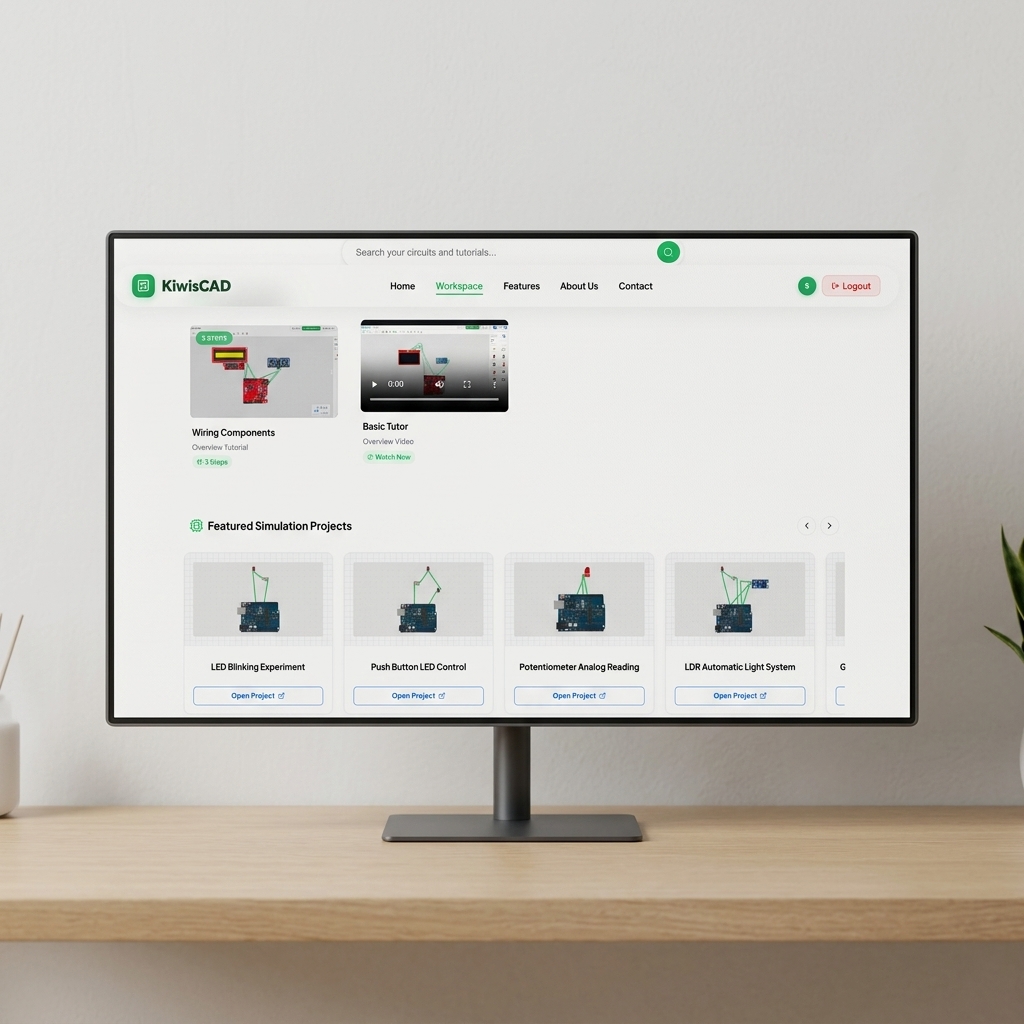
Learn quickly with interactive, step-by-step tutorials. Follow along to build circuits, write code, and simulate projects right in your workspace.
Open the KiwisCAD editor to place components, write firmware, compile sketches, and watch your circuit respond in real time — no separate tools required.
Follow the same workflow you use on the bench — design the circuit, write the sketch, then compile and simulate — entirely inside KiwisCAD.
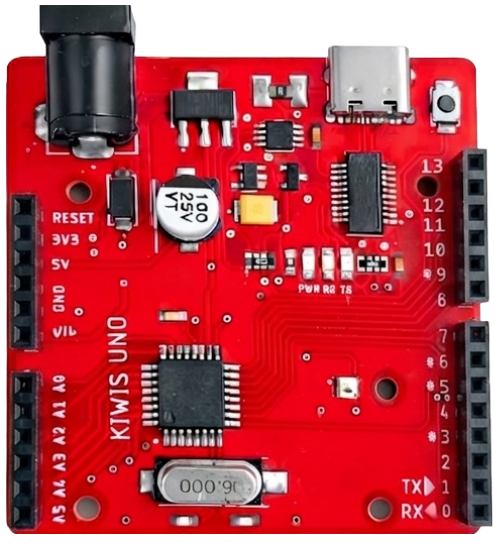
Place a real microcontroller, wire up an LCD display, and connect an Ultrasonic sensor. Validate your hardware layout before writing any code.
Hear from engineers, students, and makers who use KiwisCAD to prototype Arduino projects faster.
KiwisCAD is an online playground where you can build and test circuits directly in your browser. You can drag and drop components, write code, and watch your virtual project come to life in real time—no physical boards or tools needed!
Not at all! KiwisCAD runs entirely in your web browser (like Chrome, Edge, or Firefox). Just open the website, and you're ready to start building immediately without downloading any software.
KiwisCAD currently targets real microcontrollers. You can wire up your virtual board, write code, and test its input/output pins just like physical hardware. Support for additional board types is planned for future updates.
Simply head over to the Examples Gallery and click Launch in Editor on any starter project (like the LED Blink). It opens a fully pre-wired workspace that you can run with a single click to see how the project behaves!
Instead of buying physical parts, wiring them by hand, and dealing with loose connections, KiwisCAD lets you do everything visually in your browser. It combines circuit design, code writing, and testing in one simple screen with easy cloud saving and community sharing.
Just open the Components library on the right, drag the parts you want onto the screen, and click on their connection pins to draw wires between them. You can zoom with your mouse wheel and drag the canvas to move around.
Yes! You can toggle between a realistic-looking circuit view and a clean schematic diagram view with a single click from the toolbar. Changes in one view instantly update the other, helping you keep your design clean.
We have 50+ virtual parts available! This includes microcontrollers, LEDs, buttons, dials, screens, motors, buzzers, and various sensors. We are constantly expanding our library with new parts.
Yes, simply click on any component and press your keyboard's Delete key to remove it. You can drag components around, and their wires will stretch to follow them. You can also undo (Ctrl+Z) and redo (Ctrl+Y) easily.
Yes! You can customize pin sizes, shapes, and colors, and edit text labels to make your circuit look exactly the way you want. This is great for making clean educational drawings or personalized designs.
When you click the Start Simulation button, our website runs your code on the virtual board. It instantly simulates real behavior—turning on lights, spinning motors, and reading sensors at the exact same speeds as physical parts!
Yes, you can write standard code directly in our built-in code editor. It features helpful code completion and syntax coloring. Click compile, and your code will be prepared and ready to simulate in seconds.
The Serial Monitor is a text box in the editor that displays message prints from your code. You can use it to print sensor readings, check status messages, or log text to help you debug your project.
First, check that all wires are connected to the correct pins (make sure you didn't miss the Ground (GND) connection). Then, ensure your code compiled successfully and matches the physical pins on the canvas. You can also contact us through our Contact Page if you get stuck!
It is incredibly fast! Code compiles in a couple of seconds, and the simulation runs directly in your browser. This means your virtual project runs smoothly and in real time without lag.
You can play with the editor and run simulations without signing in! However, creating a free account lets you save your projects, build your personal gallery, and access community sharing and achievements.
All your saved projects are stored in your personal Workspace Gallery in the cloud. You can log in and open your projects to edit or run them from any device or browser.
Yes! From your gallery, you can rename your projects, delete them, or duplicate them. Duplicating is perfect when you want to try out new ideas on a copy without breaking your original working version.
Just click Forgot Password on the login page and type your email. You'll receive a password reset link in your inbox within a few minutes.
You earn experience points (XP) and unlock fun achievements by using the website—such as wiring components, writing code, and sharing projects. You can level up your rank and see your achievements on your profile!
Yes, KiwisCAD is completely free for students, teachers, and makers. It is perfect for classrooms and school labs since students can learn coding and electronics without buying expensive physical hardware kits.
Yes! Since it runs inside the browser, it works perfectly on Chromebooks, tablets, iPads, Windows, Mac, and Linux laptops. No special device setups or configurations are needed.
You can explore our Examples Gallery to launch pre-wired starter projects. We also have a **Tutorials** section with step-by-step guides, and a Community page where you can copy projects shared by other makers.
Just head to our Contact Page to send us a message directly. We'd love to help you out or hear your feedback to make the website even better!
The Community Gallery is where you can share your public projects and explore circuits built by other users. You can search for projects, copy any design you like into your own workspace, and remix it without changing the original creator's project.
No questions in this category yet.